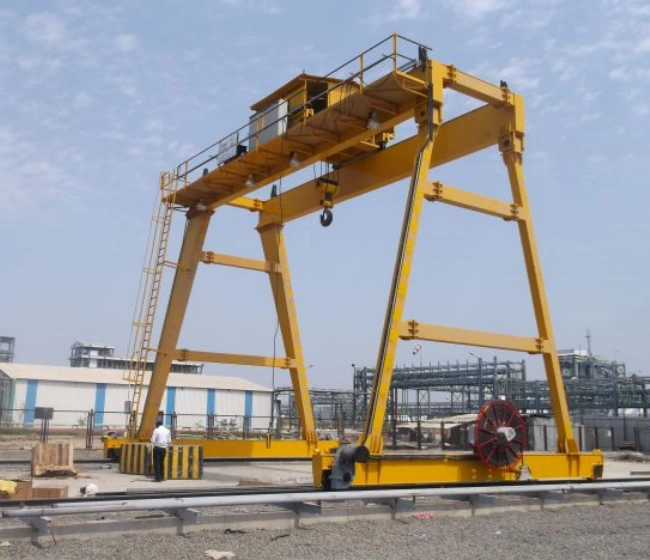
Ultimate Guide to 20 Ton Bridge Crane Specifications: Load, Span & Selection Tips
Choosing the right material handling equipment is critical for any industrial facility. Among the most popular and versatile options is the 20 ton bridge crane. Whether you are setting up a new manufacturing line, a steel warehouse, or a heavy machinery workshop, understanding the exact 20 ton bridge crane specifications is the first step toward maximizing efficiency and safety.
In this comprehensive guide, we break down the key technical parameters, structural types, and selection criteria for a 20 ton overhead crane system.
Why a 20 Ton Capacity?
The 20 ton bridge crane sits in the “sweet spot” of heavy lifting. It is heavy enough to handle large molds, steel coils, concrete products, and industrial machinery, yet it remains cost-effective compared to 50 or 100 ton systems. Industries such as automotive parts manufacturing, metal fabrication, shipbuilding, and logistics centers frequently rely on this capacity.
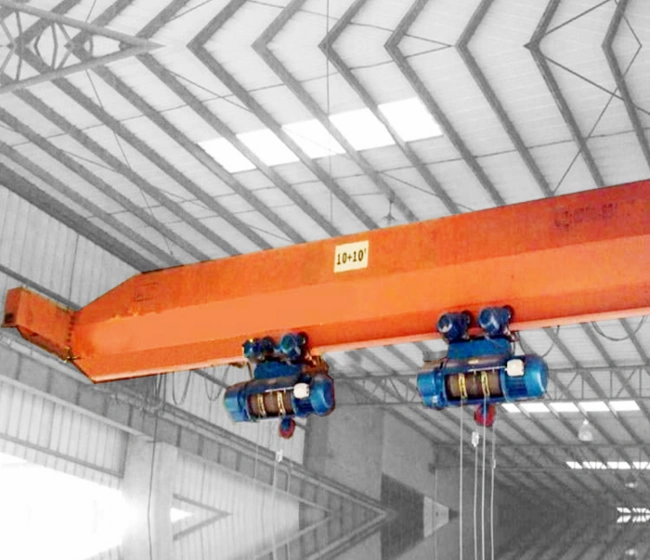
Key 20 Ton Bridge Crane Specifications
When evaluating a 20 ton overhead crane, you must focus on these core specifications:
1. Lifting Capacity
Rated load: 20 tons (20,000 kg)
Safety factor: Typically 1.25 to 1.5 (design safety margin)
Test load: 125% of rated capacity (25 tons static test)
2. Span Length
Common span range: 10 to 35 meters
Standard spans: 10.5m, 13.5m, 16.5m, 19.5m, 22.5m, 25.5m, 28.5m, 31.5m
Note: Longer spans require heavier bridge beams and larger end carriages.
3. Lifting Height (Hook Height)
Typical range: 6 to 18 meters
Customizable up to 30+ meters for special applications
Measured from floor to the top hook position at high limit.
4. Working Class (FEM / ISO / CMAA)
Most 20 ton bridge cranes for general industry use FEM 3m / ISO M5 (formerly A5)
Heavy-duty applications: FEM 4m / ISO M6 (A6) for continuous operation
Light-duty workshops: FEM 2m / ISO M4 (A4)
5. Lifting Speed
Main hoist: 0.8 – 5 m/min (variable frequency optional)
Auxiliary hoist (if equipped): 2 – 8 m/min
VFD control is recommended for precision positioning and reduced load swing.
6. Cross Travel & Long Travel Speeds
Trolley (cross travel): 2 – 20 m/min
Bridge (long travel): 3 – 30 m/min
Standard speeds: 20 m/min (cross) / 30 m/min (long) – with VFD for smooth start/stop.
7. Rail Size & Wheel Load
Recommended rail: P30, P38, or QU70 depending on span
Max wheel load: Approximately 18 – 25 tons per wheel (varies with span and girder type)
8. Power Supply
Voltage: 380V/50Hz (or 415V/460V/60Hz for export)
Control voltage: 110V/220V AC or 24V/36V for pendant/VFD
Single Girder vs Double Girder – Which One to Choose?
A common question regarding 20 ton bridge crane specifications is whether to use single or double girder design.
| Feature | Single Girder 20T | Double Girder 20T |
|---|---|---|
| Bridge weight | Lighter (lower dead weight) | Heavier (higher wheel load) |
| Headroom requirement | Lower workshop height | Requires taller building |
| Lifting height | Limited (hook near beam) | Higher lifting height possible |
| Price | Lower initial cost (~20% less) | Higher but better durability |
| Maintenance access | Easier for hoist | More space for maintenance |
| Suitable span | Up to 22–25 meters | 25 meters and above |
Recommendation: For spans up to 22.5m in a standard workshop, a 20 ton single girder bridge crane is often sufficient and more economical. For spans over 25m, frequent heavy use, or when maximum hook height is needed, choose the double girder design.
Safety Features to Look For
To ensure compliance with international standards (ISO 4301, CMAA No. 74, FEM 9.511), your 20 ton bridge crane should include:
Travel limit switches (both cross and long travel)
Hook latch and overload protection device
Emergency stop button (pendant and remote)
Buffer stops and anti-collision system
Low voltage control (110V/36V for safety)
Rail sweeper and end stopper
How to Optimize Your Crane for Google – And Your Factory
From an SEO perspective, when searching for “20 ton bridge crane specifications,” buyers often compare load charts, span limits, and working classes. From an engineering standpoint, we recommend:
Always request FEM/ISO certification from your supplier.
Choose variable frequency drives (VFD) for all motions – it reduces maintenance and improves control.
Consider remote control instead of pendant – it improves operator safety and line of sight.
Final Thoughts
Understanding 20 ton bridge crane specifications ensures you invest in the right lifting equipment for your specific application. Whether you need a single girder for general assembly or a double girder for 24/7 heavy-duty service, always match the crane’s working class and span to your real operational demands.
Before purchasing, request a detailed tech sheet from the manufacturer and ask for a site survey. A properly specified 20 ton overhead crane will deliver decades of reliable service and a strong return on investment.
10 Ton Overhead Crane Cost: Single vs. Double Girder